5 of the Most Common Places Stinging Insects Nest in NH

greaternhpestcontrol
- May 15, 2025
- No Responses
5 of the Most Common Places Stinging Insects Nest in NH
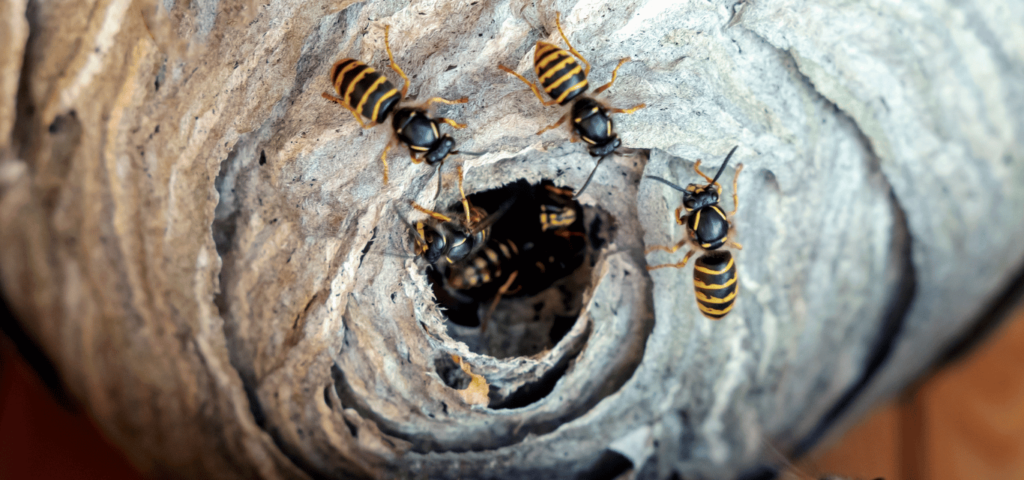
New Hampshire’s natural beauty comes with a downside—stinging insects like wasps, hornets, and yellow jackets. As the weather warms up, these pests become more active, often building their nests in and around homes, creating potential hazards for families, pets, and outdoor events. Knowing where they typically nest can help you spot and remove them early before they become a bigger problem. Here are five of the most common places stinging insects build their nests in New Hampshire.
1. Under Roof Eaves and Overhangs
Stinging insects like paper wasps and hornets love to build nests in high, sheltered spots, making roof eaves and overhangs a prime location. These areas offer protection from the elements and predators, plus easy access to the outdoors. Nests here are often visible and can grow quite large if not noticed early.
What to Look For:
Gray, papery nests hanging from the corners of your roofline or tucked near soffit vents.
Tip:
Walk around your home occasionally during spring and summer to inspect these areas and catch nests in their early stages.
2. Inside Wall Voids and Attics
Yellow jackets are known for building hidden nests inside walls and attic spaces, often entering through small cracks or vents. These locations provide ideal warmth and shelter, but they also make removal tricky and sometimes dangerous.
What to Look For:
Buzzing sounds coming from inside the walls or ceiling, especially in late summer when the nest is fully active.
Tip:
Seal up small gaps and inspect attic vents and crawl spaces regularly to reduce entry points.
3. Underground in Lawns and Gardens
In New Hampshire, it’s common to find yellow jackets nesting underground, particularly in old rodent burrows, dense shrubs, or compost piles. These ground nests are easy to overlook—until someone steps on one and gets swarmed.
What to Look For:
Increased insect traffic in and out of a single hole in the ground, particularly during daylight hours.
Tip:
Be cautious when mowing the lawn or working in garden beds—disturbing an underground nest can lead to multiple stings.
4. Inside Sheds, Barns, and Garages
Structures like sheds and garages offer stinging insects a safe haven with minimal human disturbance. Rafters, beams, and unused corners are all popular nesting spots, especially for paper wasps.
What to Look For:
Nests hanging from ceilings, tucked behind stored items, or hidden in open containers and bins.
Tip:
Keep doors closed when not in use and do a sweep of your outbuildings in spring to catch any early activity.
5. Trees, Bushes, and Shrubs
Stinging insects often nest in natural environments too. Bald-faced hornets, for example, commonly build their football-shaped nests high in trees or shrubs. These can be hard to see until they’re quite large—and by then, they can be highly aggressive if disturbed.
What to Look For:
Large gray nests hanging in tree branches or dense shrubbery, typically 3 feet or more off the ground.
Tip:
Trim vegetation away from the home and keep an eye out during yardwork, especially in late summer.
Protect Your Home and Family
Dealing with stinging insects in New Hampshire is a seasonal reality, but early detection can make all the difference. Whether it’s a nest under your deck or one hidden in the attic, it’s best to leave removal to professionals—especially once the colony is active. At Greater NH Pest Control, we specialize in safe, effective nest removal and prevention strategies tailored to local homes and businesses.
Need help dealing with stinging insects?
Contact us today for a fast, free estimate and peace of mind all summer long.